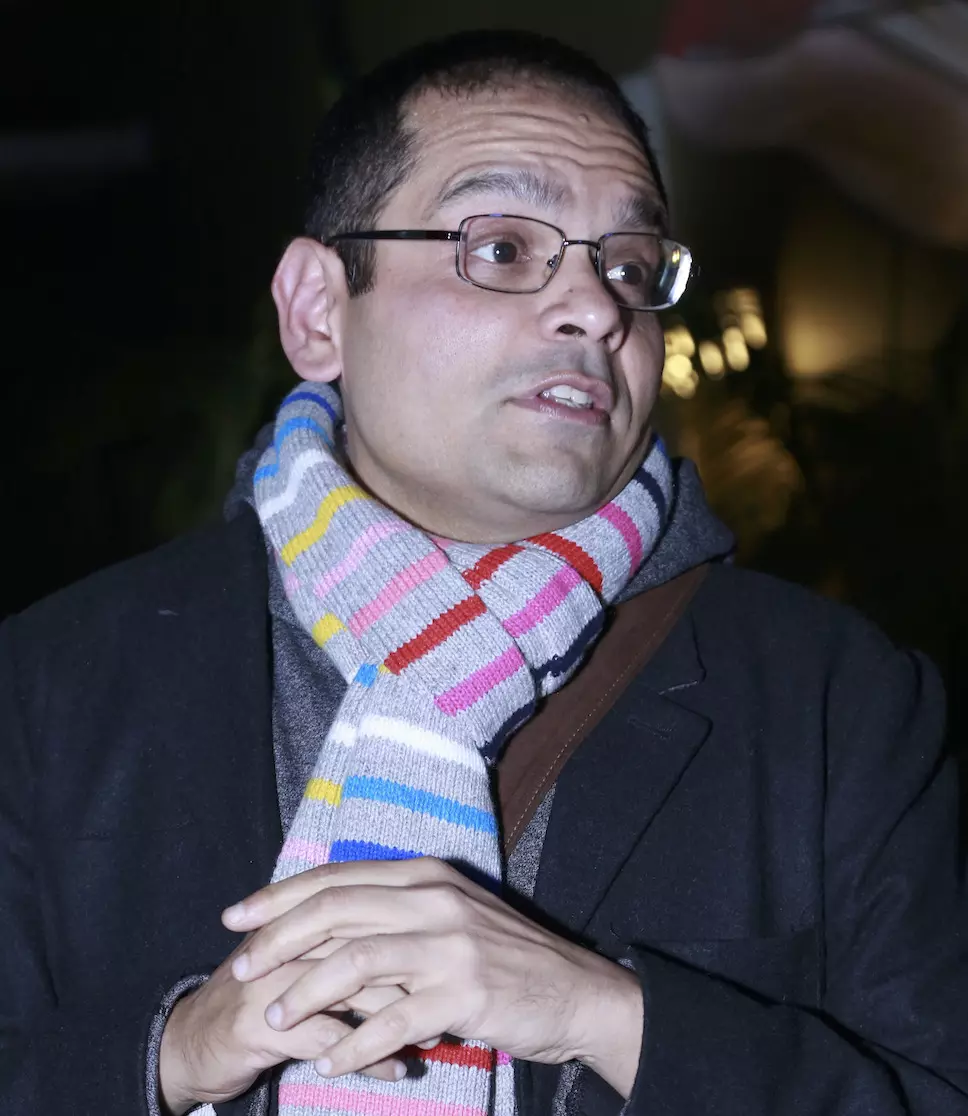

Transphobia Gets Legalised
Transphobia gets legalised as India's 2026 Transgender Amendment Bill forces medical scrutiny to prove gender, slashing welfare and echoing colonial-era law.
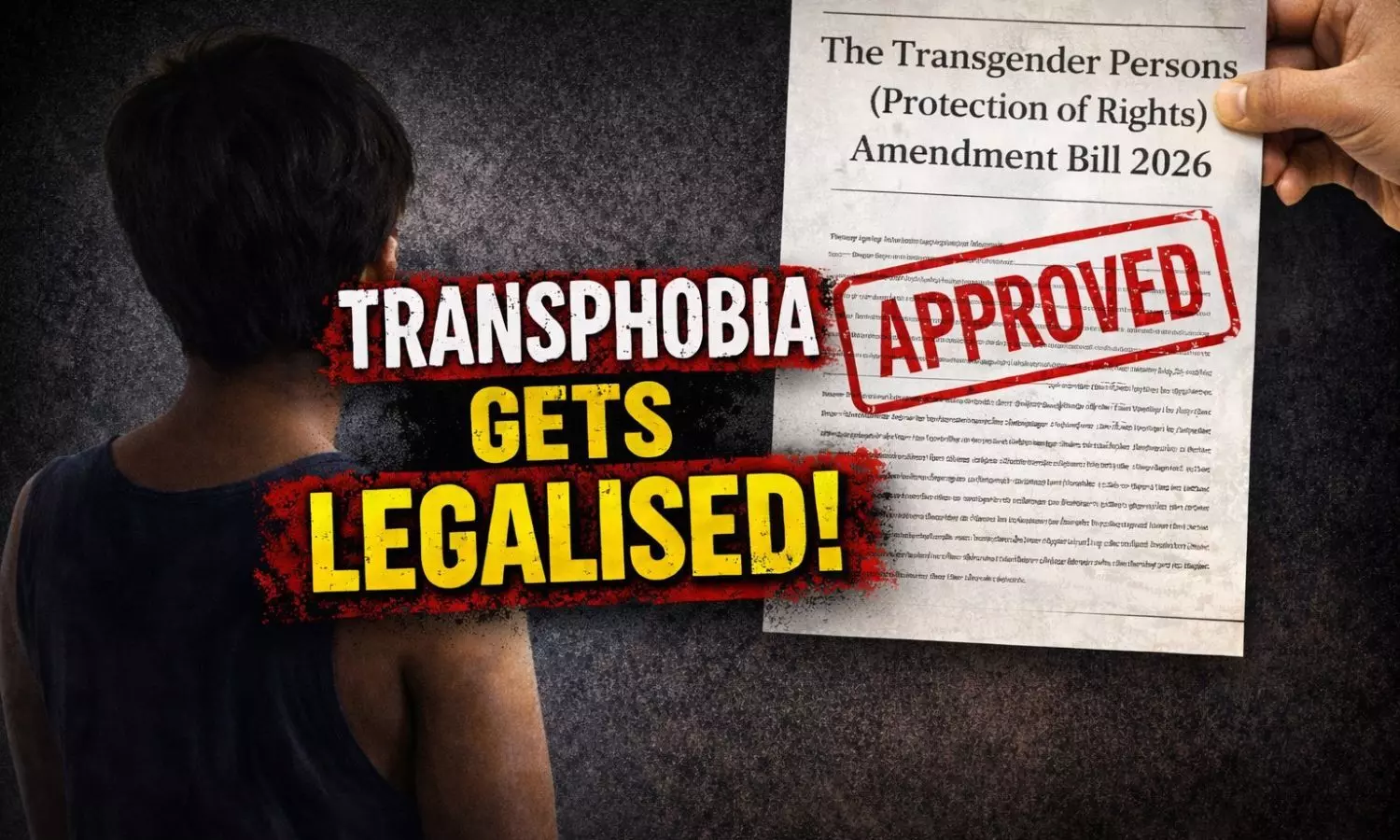
India's 2026 Transgender Amendment Bill Is Transphobia Dressed Up As Protection
Over the past few weeks, the painful truth of the Transgender (Protection) Amendment Bill 2026 has haunted many a trans life. It has led to anxiety, anger, disbelief and at times, an absolute desire to leave India and seek asylum, as some say, in a nation that protects trans lives and is open to welcoming Indian transgender persons.
Support Independent Journalism. Public interest stories that affect ordinary citizens — especially those without power or voice — requires time, resources, and independence. Your support — even a modest contribution — allows us to uncover stories that would otherwise remain hidden. Support The Probe by contributing to projects that resonate with you (Click Here), or Become a Member of The Probe to stand with us (Click Here). |
Also Read: Blood Donation Barriers: Santa Khurai’s Long SC Fight for Trans Rights
The Bill has troubled me as well, as some of the most beautiful people I have gotten to know over the past decade or so, have been transwomen, transmen and non-binary folks.
Even if I didn't know them, I'd be appalled, shocked and infuriated by the bill.
Why would I subscribe to any law that compels a person to take off their clothes, to show their body to a government-appointed medical board, to let those doctors decide what a person's gender is? Why would I want our nation to go back in time, and invoke laws that resemble the Criminal Tribes Act of 1871, a law that was part of the British's efforts to be the Raj and control lives of those who were merely 'different' from the majority, but equally human?
The fact is that every person knows their gender; they know if they fit in or not in the body they were assigned at birth. They know if they are transgender, non-binary, male or female. Some people know this within years of their birth; some take longer, going through long periods of gender dysphoria.
Also Read: Transgender Board Member in UP Accused of Abusing Trans Persons
The thing is, and most people don't realise this, sex is assigned at birth, whereas gender is an internal aspect of the self; it is how you feel, perceive and see yourself. There is no construct to what gender is. Therefore, there are no boxes to fit in and it is harmful for a government, a judiciary, medical body, a family or a society, to put anyone into a box, and deny an individual their rights to self-determine who they are and how they feel.
During a press conference held at the Gulmohar Park Club on the day the Lok Sabha passed the Bill, I heard the most frightening experience from Grace Banu, one of the voices in the community. A Dalit and a transwoman, she told us of what happened prior to the 2019 Transgender Act: they were stripped to nothing by doctors, their private parts were touched, and they were asked questions about how they had sex and what aroused them. Even as I was horrified, and so were others in that room, Grace's story was something familiar to many other transgender people. It was a reflection of how heinous the behaviour of most people with authority is towards transgender people.
Also Read: How Does India Treat Members Of LGBTQIA Community? | Fight Transphobia
The law, which is now part of the gazette, having been signed off by the President of India, would actually permit such acts even if the notification doesn't explicitly allow for the kind of atrocity meted out to Grace and others in the past.
Why, you may ask.
The fact is, hate built around societal morality of who is good or bad coupled with 'established' hierarchies of power, 'allows' those in 'authority' and in the majority to abuse minorities. This 'allowance', normalised over the years, often ensures that the oppressor is forgiven or given a mild rap on their knuckles.
To be more explicit, these acts of violence are no different to how rapists of women belonging to 'lower castes' and religious minorities, find a way to wriggle out of any culpability. At times these rapists are celebrated by law enforcers, politicians and society. In many ways, it is much like how women continue to fight to have marital rape criminalised while those against it – mostly men and in 'power' – suggest that marriage effectively allows husbands to 'own' the body of their wives, even if it is unconstitutional and a violation of fundamental rights. So, this violation of a woman's dignity that is common to many homes, is considered permissible, mundane and unquestionable.
In a somewhat similar manner, even if the law doesn't allow any such violence against the queer and transgender communities, it is acceptable to many in the majority.
In short, all these forms of hate and abuse, become atmospheric, an eco-system that nurtures the trivialisation of the lives of marginalised people, people who are disempowered in some manner or the other.
The government, as it were, insists that the new law is aimed at protecting 'genuine' transgender persons, ensuring that welfare schemes are not misused. This contention is most certainly odd, if not out of place, when you look at government data itself on what amounts have been spent on the community.
As per the census of 2011, the last recorded one, there are around 4.88 lakh transgender persons. Of them, government data states that only 5.6 per cent of them had applied for ID cards till 2023. Which means, over four years, from the time the previous act came into being (2019), till 2023, less than 30,000 transgender persons got an ID card.
While it is a separate matter that the whole process to apply for an ID card is tedious, traumatic and riddled with obstacles, government expense on welfare schemes is abysmal. According to the welfare budget of 2022-23, just 0.4 per cent of the allocated Rs 30 crore, was used. That is as little as Rs 12 lakh. Additionally, every state in India is expected to have a welfare board as per the 2019 law but as many as 19 states are still to set up one.
Also Read: Delhi Government Scores a Zero on Transgender Welfare | by Dr Aqsa Shaikh
The new law, of course, ensures that the government will spend even less. First, the definition of who is a transgender person has shrunk as the law erases the existence of transmen, transwomen, non-binary people and many who don't belong to the four socio-cultural groups of Aravani, Kinner, Hijra and Jogta. Then, the shameful process of 'proving' one's gender will deter many of those who 'qualify' as per the current law from obtaining ID card and so, will not be in a position to avail of welfare schemes.
The 2026 Act doesn't stop there as it potentially criminalises anyone who offers care (welfare) and support (financial or otherwise). It is known that most transgender people face violence from their natal families. They then have to either submit to their family or leave their home, an option a majority tend to take. Once a 'run away', they usually find and form their own families, take shelter and support from willing and helpful NGOs and healthcare professionals. But now, phrases in the 2026 law referencing "allurement", "coercion", "undue influence" or "fraud" can be weaponised by families or authorities to penalise and even jail caregivers!
The question, therefore, is: while the government keeps reiterating it wants to identify 'genuine' transgender persons and 'protect' the community, is their intent 'genuine' at all? Is it protection or destruction? Is it care or transphobia?
As I said above, the 2026 Act is nearly a clause-by-clause replication of the Criminal Tribes Act of 1871, meaning an invocation of the British Raj mindset of hate and transphobia. If one adds to this fact that government functionaries defending its law, refer and share unscientific transphobic articles from the USA, it seems obvious that the government has decided to ally with the transphobic lobby in the West, and in doing so, regress rather than progress.
Also Read: Transgender persons reveal shocking stories of bullying and workplace harassment
So, as one can see, the government has not just abandoned its own law of 2019 and disregarded the 2014 NALSA verdict; it has also walked miles away from the 'Indian roots' it has always claimed to be proud of. Those 'roots' include the fact that transgender people existed in Hindu mythology, literature and real life and that no one had to provide evidence for being who they were.
Which means, if there is anything being 'protected' in this law, it is a bias rooted in transphobia and exclusion of an already marginalised community!
Support Independent Journalism. Public interest stories that affect ordinary citizens — especially those without power or voice — requires time, resources, and independence. Your support — even a modest contribution — allows us to uncover stories that would otherwise remain hidden. Support The Probe by contributing to projects that resonate with you (Click Here), or Become a Member of The Probe to stand with us (Click Here). |