

Women's Reservation, Delimitation Bills: Rush, Secrecy, High Stakes
Parliament is rushing Women's Reservation and Delimitation bills in 3 days. Over 260 citizens demand transparency and public consultation before passage.
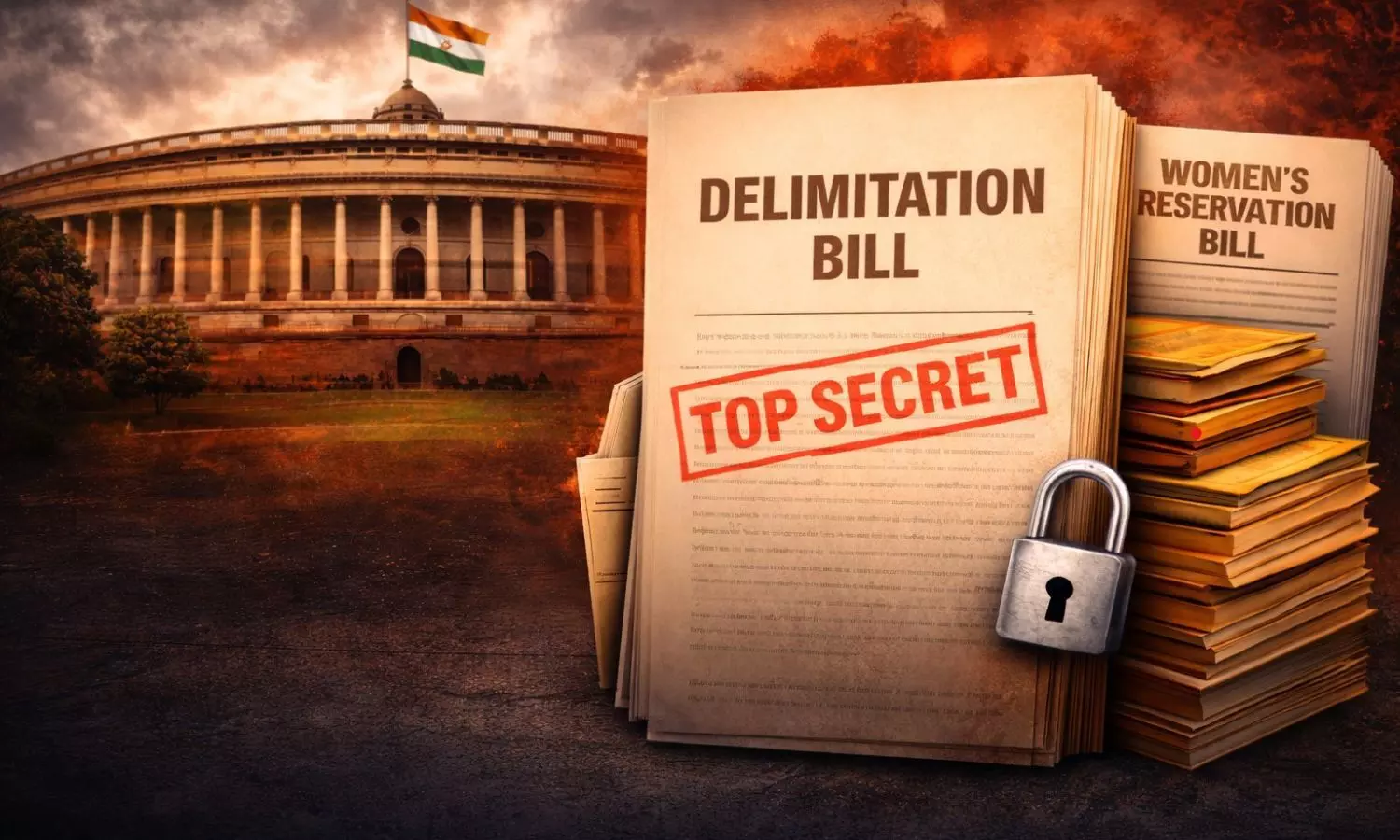
A group of over 260 academics, lawyers, retired civil servants, journalists, filmmakers, and civil society activists — including some of India's most respected public intellectuals — has issued a sharp statement demanding that the government make public the text of three bills it plans to table during a special three-day session of Parliament scheduled from April 16 to 18, 2026.
Support Independent Journalism. Public interest stories that affect ordinary citizens — especially those without power or voice — requires time, resources, and independence. Your support — even a modest contribution — allows us to uncover stories that would otherwise remain hidden. Support The Probe by contributing to projects that resonate with you (Click Here), or Become a Member of The Probe to stand with us (Click Here). |
The statement, issued on the eve of the session, contends that the bills — an amendment to the Women's Reservation Act (Nari Shakti Vandan Adhiniyam), a Delimitation Bill, and a separate bill extending the quota to Union Territories — have been kept entirely hidden from public scrutiny, reaching citizens only through anonymous "sources" quoted in media reports. The signatories say they support women's reservation in principle, many of them having campaigned for it for decades. What they oppose is the opaque, hasty, and non-consultative manner in which two of the most consequential pieces of legislation in India's post-Independence democratic history are being pushed through Parliament.
Three Bills, Three Days, Zero Public Consultation
On paper, the government's pitch is straightforward: implement 33% women's reservation from the 2029 Lok Sabha elections by amending the 2023 Nari Shakti Vandan Adhiniyam, and simultaneously conduct a delimitation exercise that would expand the Lok Sabha from 543 to 816 seats. A third bill would extend the women's quota to Union Territories. Both the reservation amendment and the Delimitation Bill require passage as constitutional amendments — changes that, under normal circumstances, demand the highest level of democratic deliberation. What is happening instead is a three-day sprint.
Also Read: Corbett Tiger Poaching: CBI Names Officers, State Says Nothing Happened
The government's stated rationale for the rush is that it refuses to let women's representation wait any longer. The original 2023 Act had tied the commencement of women's reservation to the completion of a fresh Census and subsequent delimitation. Since the Census — delayed from 2021 — is now not expected before 2027, the government is proposing to delink women's reservation from that process and instead base delimitation on 2011 Census data.
Prime Minister Narendra Modi has written to floor leaders of both Houses urging all parties to unite behind the amendments. Union Parliamentary Affairs Minister Kiren Rijiju has also written to Congress president Mallikarjun Kharge, arguing the government has already consulted numerous opposition parties.
But neither consultation with some parties nor a letter from the Prime Minister addresses what the statement's 260-plus signatories, and a growing number of constitutional experts, are flagging: that the actual text of these bills is still not in the public domain, that no formal pre-legislative consultation process was followed, and that what India's citizens know about legislation that will reshape their democracy has come from unnamed sources.
The Delimitation Time Bomb: How Seat-Expansion Punishes the South
Of all the controversies swirling around these bills, the one with the most long-term structural danger is delimitation. The proposed 50% expansion of seats — taking the Lok Sabha from 543 to 816 seats and total assembly seats from 4,123 to 6,186 — is not just a numbers exercise. It is a fundamental rebalancing of political power between Indian states, and southern states stand to lose.
Also Read: Atanu Chakraborty Exit Exposes Gaps Inside HDFC Bank
The reason is demographic. The proposed delimitation would largely be based on population data. Northern states like Uttar Pradesh and Bihar have recorded significantly higher population growth since the last delimitation exercise (which froze seat numbers based on the 1971 Census). Southern states — Tamil Nadu, Kerala, Karnataka, Andhra Pradesh, and Telangana — invested decades in population control and family planning, bringing their fertility rates down dramatically. Under a straight population-based delimitation, they are effectively penalised for their success.
Data modelling by analysts suggests that even if the Lok Sabha stays at its current 543 seats and is simply reapportioned by population, Uttar Pradesh would gain approximately 17 seats alone — more than the combined projected losses of three southern states. Under the government's actual proposal to expand the house to 816 seats, UP's gains would be far larger, with estimates ranging from 40 to 63 additional seats. Either way, the proportional shift is the same: northern states with higher population growth gain political weight, southern states lose it. Tamil Nadu Chief Minister MK Stalin has warned the delimitation exercise could push south India's collective share of Lok Sabha seats to around 24 per cent, describing it as "reengineering power."
The civil society statement does not dwell at length on this north-south dimension, but it sits squarely within it. A delimitation exercise of this magnitude, conducted using 15-year-old data, without public methodology, without state consultations, and rammed through in three parliamentary sittings, is precisely the kind of process that makes it impossible for affected communities, state governments, and ordinary citizens to understand or challenge what is being done to their representation.
The OBC Question: Whose Women Get Reserved?
One fault line that cuts across party lines and the women's rights discourse — but has been almost entirely missing from the government's framing — is the question of which women will actually benefit from women's reservation.
The current bills, as reported, make no provision for a sub-quota within women's reservation for Other Backward Classes women. Congress has reiterated its demand for a "quota within a quota" for OBC women. Congress MP Manickam Tagore has argued that the 2027 Census — if conducted before delimitation — would include OBC caste enumeration for the first time, a count that could reshape representation and potentially bring over 150 OBC women to Parliament. By conducting delimitation now, using 2011 data that predates the OBC census count, the government sidesteps this possibility entirely.
Critics allege this is not incidental. The timing — pushing delimitation and women's reservation before the OBC data is available — ensures that the beneficiaries of women's reservation will skew heavily toward upper-caste and dominant-caste women who already have social capital to contest elections. This is a long-standing critique of the women's reservation framework in India: reservation without sub-categorisation effectively reserves seats for women who are already relatively privileged.
Democracy in the Dark: The Process That Was Skipped
The legal and democratic case against the process being followed rests on a specific, concrete policy commitment the government made to itself: the Pre-Legislative Consultation Policy adopted by the Union Government in 2014.
This policy mandates that draft legislation be placed in the public domain for at least 30 days before being sent for Cabinet approval, with public comments invited and a summary of feedback published on the ministry's website. Wide publicity through print and electronic media is also required.
Also Read: Is the Indian Navy Ready for Underwater Warfare?
None of this has happened with the Women's Reservation amendment or the Delimitation Bill. As of the date the civil society statement was issued — April 13, 2026, three days before Parliament was to convene — the draft text of these bills had not been made public. The government's own 2014 framework treats this as non-negotiable for legislation with "far-reaching" effects on citizens. Few bills in recent memory have more far-reaching effects than these two.
The statement demands, as its core ask, two things: make the text of the draft bills public immediately in multiple languages, and put them through robust pre-legislative consultation in line with the 2014 policy. It notes with pointed irony that it is a "profound disservice to the democratic process to introduce legislation for women's empowerment while simultaneously excluding women from the conversation."
The statement carries the signatures of 262 individuals. They span the country geographically and represent a wide cross-section of Indian public life. Economist Jayati Ghosh lends her name alongside political scientist and Professor Emerita Zoya Hasan of JNU. Rights activist Teesta Setalvad of Citizens for Justice and Peace has signed, as has filmmaker Anand Patwardhan, transparency activist Anjali Bhardwaj, and former National Federation of Indian Women general secretary Annie Raja.
Retired civil servant and former IAS officer Ashish Joshi is among the signatories, as is former Telangana IAS officer K Sujatha Rao, former Ambassador Madhu Bhaduri, IAS officer MG Devasahayam from Karnataka, and former Chief Secretary of Madhya Pradesh Sharad Behar. The presence of so many former civil servants is significant: these are people who have seen governance from the inside and are flagging that the process being followed is not normal. Nivedita Menon, retired professor from Delhi, Harsh Mander of Karwan e Mohabbat, Nikhil Dey of the Mazdoor Kisan Shakti Sangathan, and Apar Gupta, one of India's most prominent digital rights advocates, are also signatories.
What Happens Next
The three-day Parliament session begins April 16. The BJP has issued a three-line whip to all its MPs. The opposition is expected to demand more time, push for the bills to be referred to a Joint Parliamentary Committee, and raise the OBC sub-quota issue on the floor. How the government responds — whether it allows meaningful debate or uses its numbers to push through what would be historic constitutional changes in 72 hours — will be a test not just of these specific bills, but of what India's Parliament is for.
Support Independent Journalism. Public interest stories that affect ordinary citizens — especially those without power or voice — requires time, resources, and independence. Your support — even a modest contribution — allows us to uncover stories that would otherwise remain hidden. Support The Probe by contributing to projects that resonate with you (Click Here), or Become a Member of The Probe to stand with us (Click Here). |